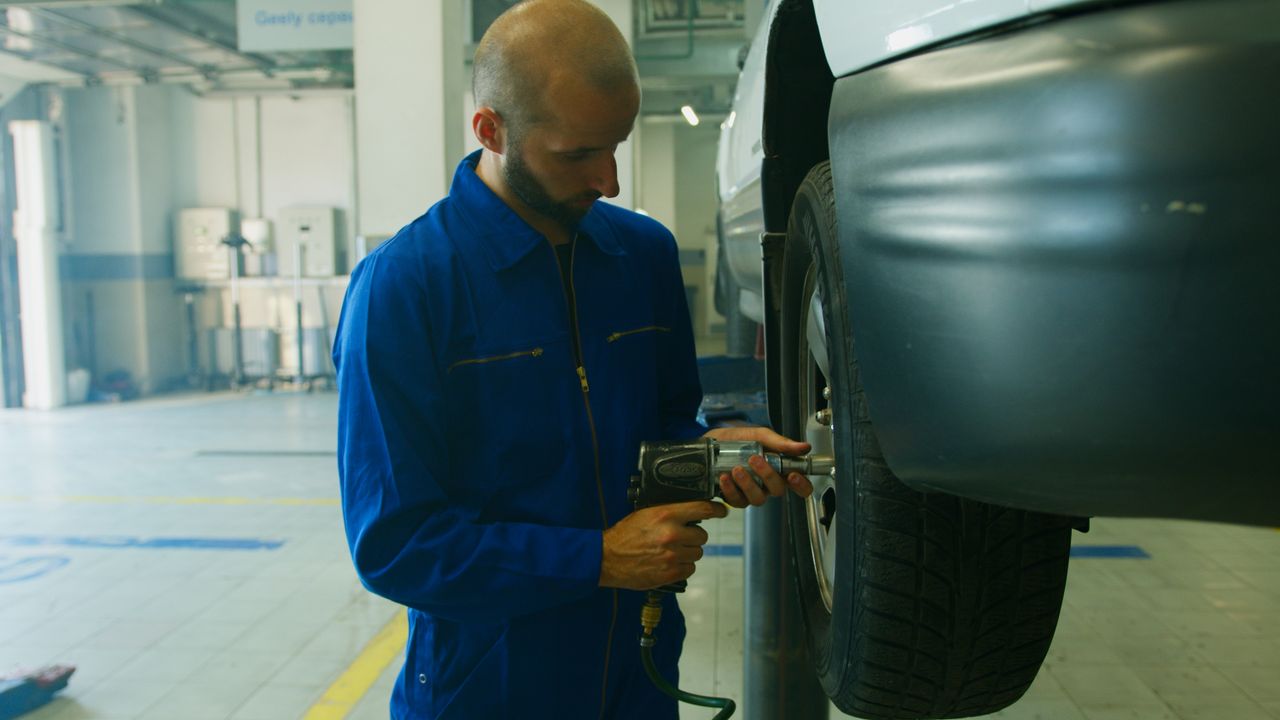
Drive Straighter, Save Tyres: Why Alignment Matters
When your wheel alignment is out, driving stops feeling easy. The car might pull to one side, the steering wheel could sit off-centre on a straight road, or the whole car may feel nervous at speed. You might also notice tyres wearing on the inside or outside edges long before the tread in the middle is gone.
Wheel alignment is simply the process of setting the angles of your wheels so they sit correctly on the road and line up with each other. It is all about adjusting the suspension, not the tyres themselves, so that everything points in the right direction.
Good alignment helps with:
- Safer, more predictable steering
- Shorter stopping distances in real-world driving
- Better fuel economy on daily trips and longer runs
- Longer tyre life so you are not replacing them early
After a rough winter with potholes and broken surfaces, alignment can easily shift. Spring and early summer, when people start planning longer drives, is a smart time to get a wheel alignment check in Ryton so the car feels stable and relaxed on the road again.
The Three Angles Your Mechanic Really Cares About
To keep things simple, your alignment comes down to three main angles: camber, caster and toe. They sound technical, but each one has a clear job.
Camber is the tilt of the wheel when you look at the car from the front.
- If the top of the wheel leans in towards the car, that is negative camber.
- If the top leans out away from the car, that is positive camber.
Too much negative camber can make the inner edge of the tyre wear quickly. Too much positive camber can wear the outer edge. The right camber helps the tyre sit flat on the road in a corner so you get good grip without wearing one edge away.
Caster is the tilt of the steering axis when you look at the car from the side. Think of it like the angle of a shopping trolley wheel, which trails behind the point where it pivots.
- More positive caster helps the steering wheel straighten itself after a turn.
- If caster is out, the car can wander or the steering can feel heavy and unhelpful.
Caster is not something you see with your eyes, but you feel it in how steady the car feels at speed.
Toe is the angle of the wheels when you look from above. A simple way to picture it is to think about your feet when you walk.
- If your toes point in towards each other, that is toe-in.
- If your toes point out, that is toe-out.
It is the same with tyres. Too much toe-in or toe-out makes the tyres scrub across the road instead of rolling cleanly. That can cause:
- A twitchy feeling, especially on bumpy or grooved roads
- The car following ruts or white lines
- Very fast tyre wear across the tread
These angles are only changed by tiny amounts, often fractions of a degree or a few millimetres, but those tiny changes have a big effect on how the car feels and how long your tyres last.
Step-by-Step: What Happens During a Wheel Alignment
When you bring your car in for a wheel alignment check in Ryton, it is not just a quick tweak of one bolt. There is a clear process to get things right.
First, the technician will talk through what you have noticed while driving. They will usually:
- Check tyre tread and pressures
- Look for uneven wear patterns
- Inspect steering and suspension parts for play or damage
If something is worn or bent, it needs sorting before the alignment can be set properly.
Next, the car is driven onto the alignment ramp so it sits level. Special clamps or targets are fitted to each wheel. These are light and designed so they do not damage the rims. The alignment system is then set up with your car’s make and model so it knows the correct factory settings.
The system measures camber, caster and toe on all four wheels. On the screen, you will usually see readings in green if they are within the set range, or red if they are outside it. The technician compares what the car is doing now with what the manufacturer recommends.
Then comes the adjustment stage. Small, accurate tweaks are made to:
- Track rods to set toe
- Camber bolts or adjustment points to set camber
- Other suspension arms if the design allows caster changes
After each set of changes, the car is remeasured. This repeat-and-check approach makes sure each wheel is brought into line without upsetting another setting.
Once the readings look right, there is a final check to see that the steering wheel is straight and the car tracks correctly. You should normally be shown a printout of the readings from before and after, so you can see exactly what has changed.
How Wheel Alignment Is Measured and Why Millimetres Matter
Modern alignment equipment uses lasers or high-precision cameras with reflective targets to read wheel positions extremely accurately. It measures in degrees and minutes, and often shows how far things are out in millimetres too.
On a typical alignment sheet, you will see:
- Camber for each wheel, shown as a small positive or negative number in degrees
- Caster on the front axle, often a larger positive number in degrees
- Toe per wheel, plus a total toe figure for each axle
Even if a wheel is only a few millimetres out on toe, over thousands of miles that means the tyre is constantly being dragged sideways. That extra scrub wastes rubber, uses more fuel and can make the car feel tiring to drive.
Modern vehicles with driver assistance systems are especially sensitive to poor alignment. If the wheels are not pointing where the car thinks they are, it can affect how stable the car feels on the road. This is one reason why a proper computerised alignment carried out by trained staff is so important.
The good news is that you do not need to worry about the numbers yourself. During a wheel alignment check in Ryton, the technician can explain clearly what was out of line, how it has been adjusted, and what that means for how your car will drive.
When You Should Book a Wheel Alignment Check in Ryton
Alignment is not just something to think about when you buy new tyres. There are plenty of signs that your wheels might need checking.
Common things drivers notice include:
- The car pulls to one side on a straight, flat road
- The steering wheel is not straight when driving straight
- The tyres are wearing faster on one edge
- The car has hit a pothole or a kerb hard
- Steering or suspension parts have just been replaced
Seasonal changes and driving habits matter too. After winter roads with potholes and loose surfaces, alignment can easily shift. Before longer summer trips, many drivers like to make sure everything is pointing straight and the tyres are protected.
As a rough guide, it is worth having alignment checked at least once a year or every ten to twelve thousand miles, and always after fitting new steering or suspension parts. A quick check can save a full set of tyres from early wear, which is especially important if your car has larger wheels or premium tyres.
Ryton Tyre & Autocentre is a local tyre, wheel alignment and vehicle maintenance specialist, so we work with these checks every day. We can also look at your brakes, exhausts, MOT support needs and diagnostics at the same visit so your car leaves feeling tight, safe and ready for the road.
Get A Smoother, Safer Drive With Expert Wheel Alignment
If you have noticed uneven tyre wear, pulling to one side or a less comfortable drive, we can help put it right quickly and accurately. Book a professional wheel alignment check in Ryton and our experienced technicians at Ryton Tyre & Autocentre will assess and adjust your vehicle using precise equipment. This simple check can improve handling, extend tyre life and save you money on fuel. Get in touch today to arrange an appointment that fits around your schedule.